
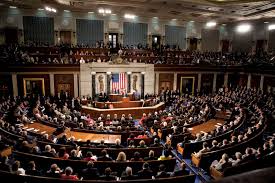
The United States House of Representatives has passed the Farm, Food, and National Security Act of 2026, a sweeping agriculture bill that formally separates industrial hemp from cannabinoid-linked crops for the first time in American regulatory history, drawing a clearer line between hemp grown for fibre and grain and hemp cultivated for CBD and related products.
The measure passed in a 224 to 200 vote, aligning farm-level regulations with previous congressional actions that targeted the market for intoxicating hemp products. The legislation is intended to replace the 2018 Farm Bill, which had been subject to repeated extensions and widely criticised for leaving the CBD sector in legal grey areas that enabled rapid market growth without meaningful federal oversight.
The bill does not resolve core issues regarding finished products. The US Food and Drug Administration retains authority over aspects including safety, dosage, labelling, and marketing of wellness CBD. Industry participants had pushed for a comprehensive resolution ahead of the November 2026 compliance cliff, when tighter federal hemp restrictions are scheduled to take full effect.
The legislation does not delay or revise the enforcement timeline of November 2026 for hemp-derived intoxicating products, which was set in motion by the 2025 appropriations law and targets synthetic and chemically converted cannabinoids. That provision had already begun producing significant disruption to capital formation and supply chain agreements across the hemp sector.
Growers seeking industrial hemp status must provide verifiable proof of their production’s consistency with industrial use, including certified seed tags, sales contracts, Farm Service Agency filings, or specific harvest methods. Producers unable to provide such evidence will be subject to the full testing regime.
The House draft integrates hemp into a regulatory structure closely linked to law enforcement, with the USDA taking a role in laboratory accreditation in consultation with the Drug Enforcement Administration. This model is not applied to other major US crops.
For the broader CBD industry, the bill offers partial relief but falls well short of the comprehensive federal framework that manufacturers and retailers have been seeking. The November 2026 deadline, written into the 2025 continuing resolution, imposed a 0.4 milligram total THC per container limit on finished hemp products and shifted the definition of compliant hemp from delta-9 THC content to total THC content including THCA.
The US Hemp Roundtable has estimated that the amended definition would eliminate approximately 95 percent of existing hemp-derived cannabinoid products, with corresponding losses of over 300,000 jobs and $1.5 billion in aggregate state tax revenue.
Beyond the House Farm Bill, other legislative proposals remain under consideration, including bills from Kentucky Republican Representative Andy Barr and Oregon Democrat Senator Ron Wyden, both of which aim to regulate intoxicating hemp products and define the regulatory role of CBD. Whether any of those proposals can progress before the November enforcement date remains uncertain, with industry pressure expected to intensify significantly over the coming months.