
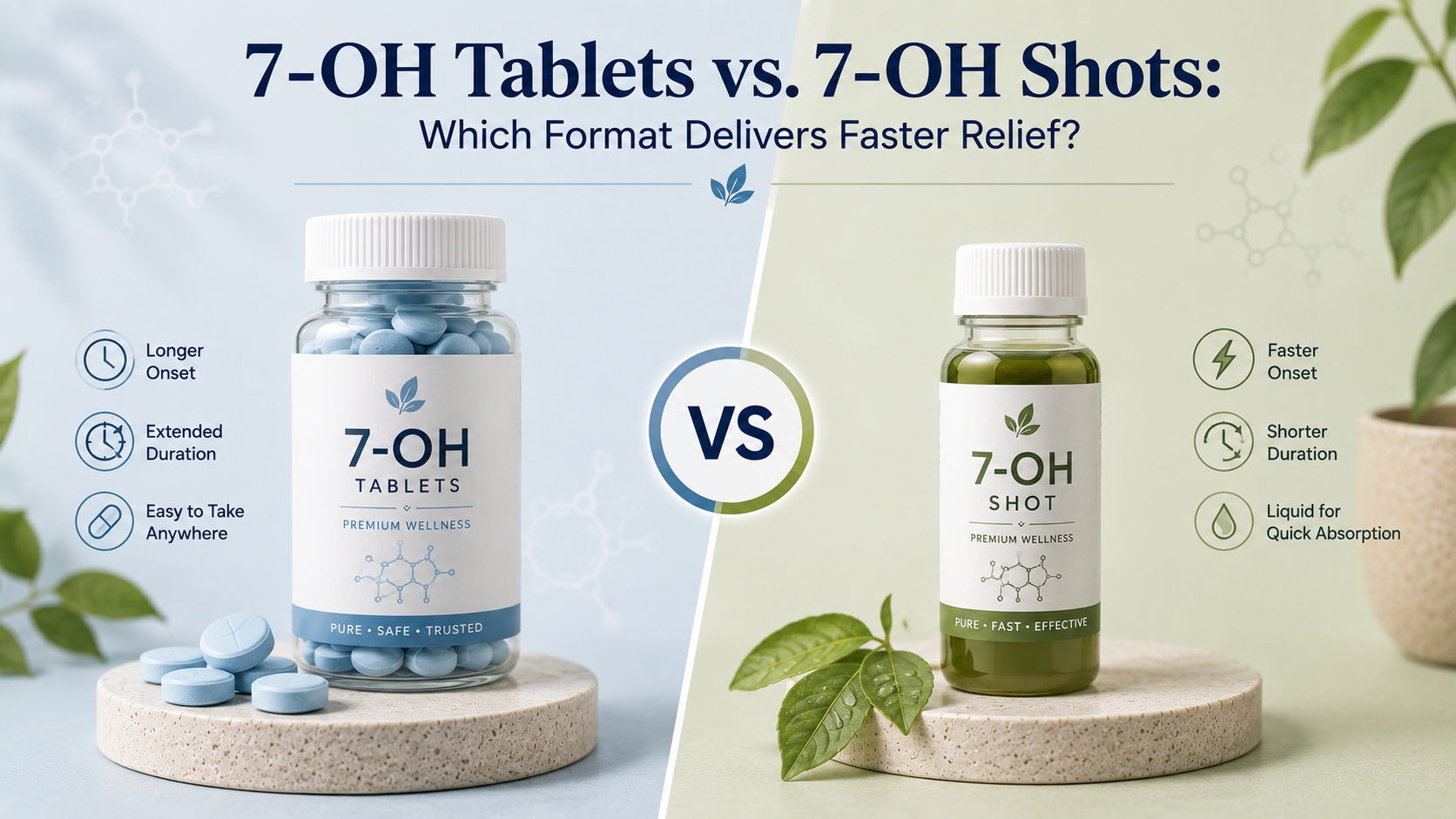
Kratom users in 2026 have more product formats than ever, and two of the most popular are 7-OH tablets and 7-OH shots. Both contain concentrated 7-hydroxymitragynine, the alkaloid responsible for the strongest effects associated with the kratom plant, but they deliver that compound to your body in different ways. The choice between a tablet and a shot is not just about taste or convenience. It affects how fast you feel the product working, how easy it is to control your serving size, and how much you end up paying per milligram.
This guide breaks down the practical differences between tablets and shots, looks at the science behind onset times, and helps you decide which option fits your daily routine. By the time you finish reading, you will know which format works best for your goals and your tolerance level.
What 7-OH Tablets Actually Are?
7OH tablets are compressed, pre-dosed pills that contain a specific amount of 7-hydroxymitragynine extract. Most tablets sold today range from 5 mg on the low end to 100 mg or more for advanced users. Brands such as 7Stax, Kream, Opia, and Pressd sell tablets in single-count blister packs and larger multi-count bottles, giving buyers flexibility based on tolerance.
Tablets are popular because the dose is measured exactly. There is no guesswork, no need for a scale, and no risk of taking too much by accident. They are also easy to carry, since a small bottle fits inside a pocket or bag. Most tablets are designed to be chewed or swallowed with water, and they work through the digestive system, which means effects typically begin within thirty to forty-five minutes.
What 7-OH Shots Bring to the Table?
A 7-OH shot is a small bottle of liquid containing dissolved 7-hydroxymitragynine, usually flavored to mask the natural bitterness of the extract. Single-serving shots typically range from 15 mL to 30 mL and contain anywhere from 30 mg to 100 mg of active alkaloid. Because the product is already in liquid form, it absorbs more quickly through the soft tissues of the mouth and stomach.
Many users report feeling the first effects within ten to twenty minutes, which is roughly half the time that tablets take. Shots also tend to taste better than raw kratom powder or extract capsules, with options like blueberry lemonade, strawberry, and tropical fruit blends. This makes them an easier entry point for people who are new to kratom alkaloid products and want flavor.
Onset Speed and Bioavailability Compared
Onset speed is one of the clearest differences between these two formats. Liquid shots bypass the slow disintegration phase that solid tablets go through, so the alkaloid reaches the bloodstream sooner. If you need fast acting relief from fatigue, stress, or discomfort, shots typically win. Tablets, on the other hand, offer a slower, more gradual onset that some users prefer for sustained effects throughout the workday. Bioavailability also differs slightly.
Liquid formulations are absorbed more completely than solid pills in many cases, though the difference is small when both products use high-purity extract. For users tracking exact serving sizes for long-term use, tablets remain easier to log and adjust over time as your tolerance grows.
Dosing Precision and User Control
Tablets give you the cleanest dosing experience available. A 25 mg tablet always contains 25 mg, and splitting that into halves or quarters is simple. This makes tablets the better choice for beginners, micro-dosers, and anyone who values predictability. Shots, while still pre-measured, are harder to split. A 30 mg shot is meant to be consumed in one go, and saving half for later means the liquid can degrade or oxidize if not refrigerated properly.
For users who want full control over how much they take and when, tablets are the more flexible option. For users who want a single, simple dose with no math involved, shots win on simplicity and ease of use.
Cost Per Milligram and Long-Term Value
Price is another factor where tablets and shots differ. On average, 7-OH tablets cost between ten and twenty five cents per milligram of active extract, depending on the brand and pack size. Bulk multi-count bottles bring the cost down considerably. Shots usually fall between twenty five and fifty five cents per milligram, since the cost includes flavoring, bottling, and shelf-stable packaging.
If you take a consistent daily serving, tablets almost always come out cheaper over the course of a month. Shots make more sense for occasional use, travel, or social settings where a quick liquid serving is more convenient than fishing a pill out of a bottle. For shoppers comparing the two, explore the full premium 7-OH shots collection.
Portability and Discreet Use
Both formats are travel friendly, but tablets edge ahead when it comes to discretion. A small bottle of 7-OH tablets looks no different from any other over the counter pill bottle, and you can take one without drawing attention. Shots are slightly more conspicuous, since they come in colorful, branded bottles that often look like energy drinks.
If you fly often or move between work and home, tablets pack flatter and survive temperature changes better. Shots are best stored upright in a cool place, and some users keep them refrigerated for freshness. For office workers, gym goers, or anyone who needs to take their serving quietly, tablets are usually the better fit overall.
Which Format Is Right for You?
Choosing between tablets and shots really comes down to your priorities. Pick tablets if you value exact dosing, lower cost per milligram, easy portability, and flexibility for both single use and stacking. Pick shots if you want the fastest onset, a pleasant flavor, and a grab and go format with no measuring required. Many regular users keep both on hand.
They use tablets for daily, planned servings and reach for shots when they need quick relief or a flavored alternative. Whatever you choose, buying from a trusted seller with lab tested products is essential. Always check for clear potency labels, batch testing, and a transparent return policy before placing an order with any seller.
Lab Testing and Quality Verification
Both tablets and shots should always come from brands that publish third party lab results. These tests confirm the actual milligram content of 7-OH in each product and screen for heavy metals, microbes, and other contaminants. A retailer that refuses to share lab results is a retailer to avoid. The kratom alkaloid market has seen its share of counterfeit and underdosed products in recent years, and the only protection against that is buying from a transparent source.
Whether you choose tablets, shots, or both formats in rotation, make lab verification a standard part of your buying process. It is the single most important quality signal you can check before placing an order.
Frequently Asked Questions
1. Are 7-OH tablets stronger than 7-OH shots?
Not necessarily. Strength depends on the milligrams of 7-hydroxymitragynine in each unit. A 100 mg tablet is stronger than a 30 mg shot, but a 100 mg shot would match it on paper.
2. Can I take a tablet and a shot together?
Stacking products is something experienced users sometimes do, but doubling up increases the total alkaloid load. Start with one format only, especially if you are new to 7-OH products.
3. Which format is better for beginners?
Low-dose tablets are generally better for beginners because they allow precise, small servings. Most shots contain larger amounts that may be too strong for first-time users.